Why Roof Leaks Sometimes Only Show Up During the First Freeze
A roof can make it through months of rain without a single noticeable leak, only to develop a problem when temperatures suddenly drop below freezing. For homeowners, this can be confusing. If the roof handled heavy rain all year, why would the first freeze suddenly cause water to appear inside?
The answer often comes down to small weaknesses that remain hidden during ordinary weather. Tiny openings, deteriorated flashing, and other vulnerable areas may be more likely to allow water intrusion when freezing temperatures cause roofing materials and components to contract and shift slightly.
Small Openings Can Become Bigger Problems
Not every roof leak starts with an obvious hole or major area of damage. Small cracks, gaps around roofing materials, worn sealants, and openings around roof penetrations may allow a limited amount of moisture to enter.
During normal rainfall, these openings may not allow enough water inside to create a noticeable interior leak. Water may drain away or remain contained within the roofing system without immediately reaching the attic or living space.
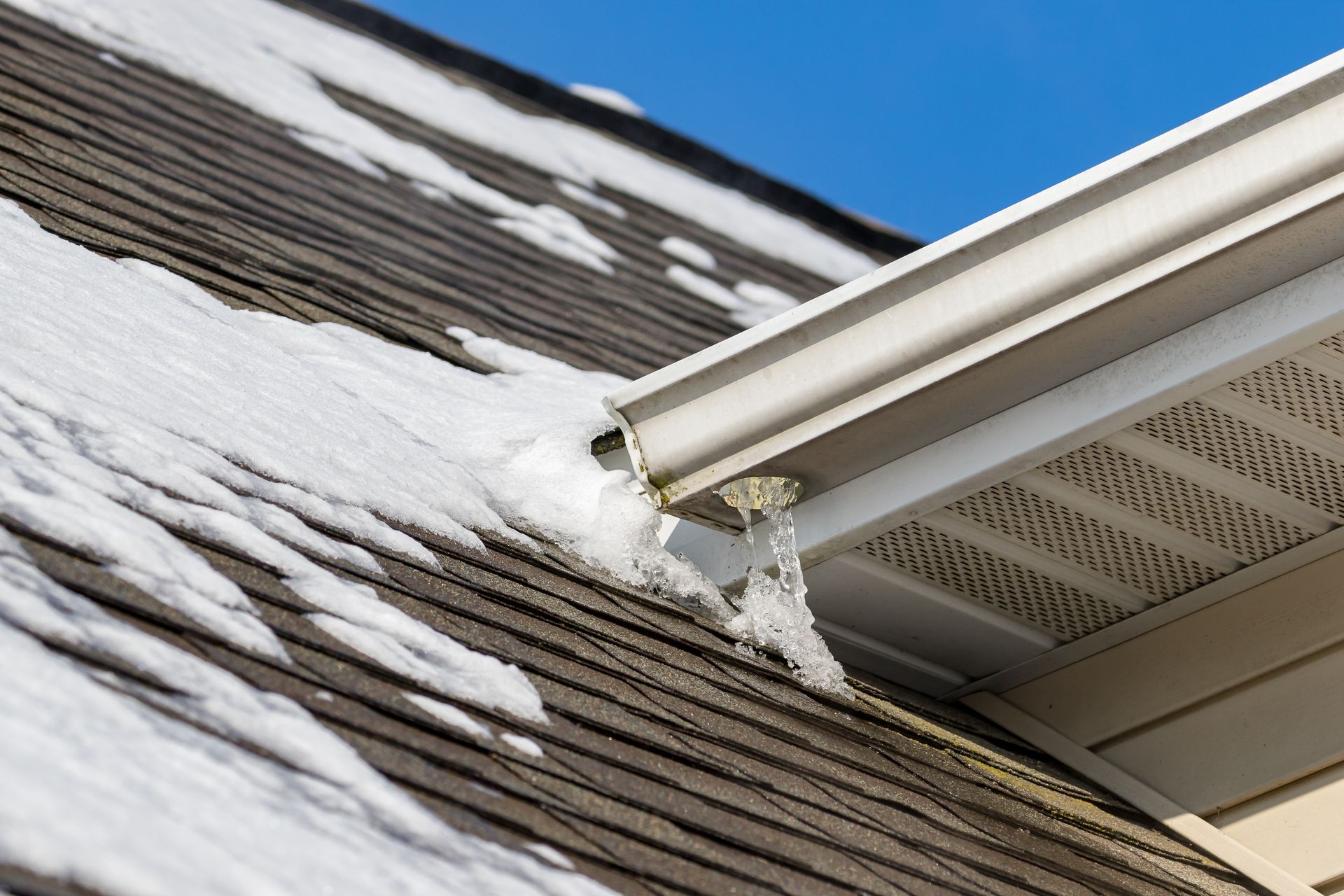
Freezing temperatures can change that. When moisture gets into a small opening and freezes, it expands. That expansion can put additional pressure on already-weakened roofing materials, potentially widening a crack or separating materials that were previously sealed.
The result can be a leak that seems to appear out of nowhere when the first hard freeze arrives.
Flashing Defects May Not Leak Right Away
Flashing around chimneys, skylights, vents, walls, and other roof transitions has to seal areas where roof surfaces and materials meet at different angles. Those junctions can be more vulnerable to small gaps, movement, and deterioration over time.
A small flashing defect may not cause an obvious leak during a typical rainstorm. However, repeated temperature changes can cause roofing materials, flashing, and sealants to expand and contract at different rates.
Over time, this movement can create or enlarge gaps. When freezing temperatures arrive, moisture can enter these weakened areas, freeze, and expand, making an existing defect more pronounced.
Freeze-Thaw Cycles Can Expose Weak Points
The first freeze is not necessarily the only concern. Throughout winter, repeated freeze-thaw cycles can put additional stress on vulnerable areas of a roof.
Water can enter a small crack or opening while temperatures are above freezing. When temperatures drop, that water freezes and expands. When temperatures rise again, the ice melts, and the process can repeat.
Over multiple cycles, this expansion and contraction can gradually worsen a small defect. A vulnerable area that allowed little or no water intrusion in the fall may become a much more significant source of water intrusion during winter.
Because these defects can be small and difficult to spot from the exterior, homeowners may not realize a gap has developed until they notice a ceiling stain, damp insulation, dripping water, or other signs of interior damage.
Why Fall Is a Good Time for a Roof Inspection
Waiting until winter weather exposes a roofing problem can mean dealing with repairs at the least convenient time.
Scheduling an inspection in September or early October gives homeowners an opportunity to identify potential trouble spots before temperatures drop.
A professional inspection can look for signs of:
- Cracked, damaged, or deteriorated shingles
- Gaps around flashing and roof penetrations
- Worn or failing sealants
- Damaged roof components
- Areas where water may collect
- Previous repairs that may have weakened over time
- Other vulnerabilities that could become worse during freezing weather
Fall inspections can also be easier to perform before snow and ice cover portions of the roof. Clear conditions make it easier to identify problem areas, and repairs are generally simpler to complete before winter weather limits access or affects installation conditions.
Prepare Your Roof Before the First Freeze in West Michigan
If your roof has been exposed to years of weather or you have noticed any signs of damage, don't wait for the first freeze to find out that your roof is vulnerable. Contact us at Advantage Roofing by calling (269) 372-1691 to schedule an inspection and get your roof prepared for the colder months ahead.