Why Some Roof Problems Get Worse After the Leaves Fall
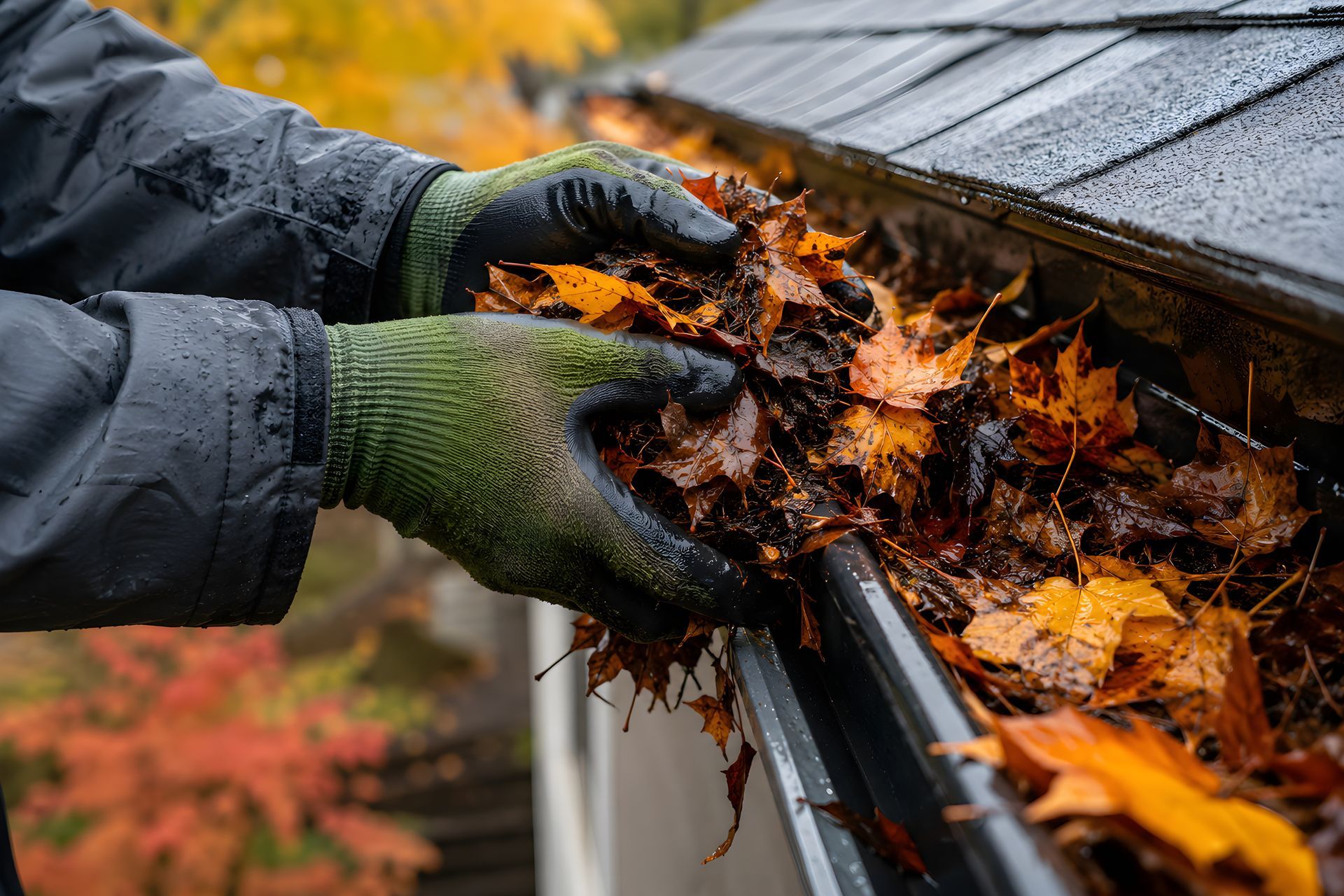
When the leaves start falling, most homeowners think about raking the yard, clearing the driveway, and cleaning out the gutters. But fallen leaves can create roofing problems in places that are much less obvious than the gutter system.
Leaves and other debris can collect in roof valleys, behind chimneys, around roof-to-wall transitions, and near low-slope sections. When these areas stay covered with damp organic material, existing weaknesses can become harder to see and potentially more likely to cause problems.
That means the period after the leaves fall can be an important time to pay attention to your roof, not just the gutters.
Leaves Can Collect in Roof Valleys
Roof valleys are designed to direct water from two intersecting roof sections toward the drainage system. Because of their shape, however, valleys can also become natural collection points for leaves, pine needles, and other debris.
A thin layer of leaves may not seem concerning, but a larger accumulation can interfere with normal water flow. Wet leaves can also hold moisture against roofing materials for extended periods.
If leaves or debris remain packed in a valley after the surrounding roof has cleared, removing the buildup can help restore drainage and make it easier to spot any underlying issues such as damaged shingle, deteriorated flashing, or another weakness in the valley.
Debris Behind Chimneys Can Hide Problems
The area around a chimney is another place where leaves can accumulate. The transition between the chimney and roof requires flashing to help keep water from entering the structure.
Leaves that collect behind or around a chimney can trap moisture against flashing, shingles, and masonry and slow normal drainage after rain. If there is already a small gap, deteriorated sealant, or flashing defect in that area, prolonged moisture exposure can make water intrusion more likely.
Roof-to-Wall Transitions Need Attention
Where a roof meets an exterior wall, multiple materials and surfaces come together. These transitions require careful installation and appropriate flashing to direct water away from the structure.
Leaves can become lodged along these edges, particularly where the roof configuration creates a natural shelf or collection area. If debris remains there, it can hold moisture against the roofing and flashing and slow drainage after rain. Over time, that prolonged moisture exposure can make existing gaps, deteriorated sealants, or flashing defects more likely to allow water intrusion.
Low-Slope Areas Can Hold Debris
Low-slope sections of a roof can be particularly susceptible to debris accumulation because they may not shed water and leaves as quickly as steeper sections.
When leaves become wet, they can form dense layers that hold moisture against the roofing surface. If water cannot drain efficiently, the area may remain damp for longer periods.
A low-slope section does not necessarily have to look severely clogged to warrant attention. Even modest debris buildup can interfere with drainage in areas where water already moves more slowly, so accumulated leaves and other debris should be removed before they contribute to prolonged moisture exposure.
Leaf Buildup Can Make Existing Roof Problems Worse
Leaves do not usually create roofing defects on their own, but accumulated debris can make an existing weakness more problematic. Wet leaves can hold moisture against shingles, flashing, and other roof components while also slowing drainage from valleys, transitions, and low-slope areas.
If a small gap, deteriorated flashing detail, or damaged roofing material is already present, prolonged moisture exposure can increase the likelihood of water intrusion.
Clearing significant debris before winter helps water and melting snow drain normally and reduces the amount of moisture being held against vulnerable areas of the roof.
Get Your Roof Checked Before Snow and Ice Arrive in Kalamazoo
A professional roof inspection can identify problems that may be difficult to spot from the ground and address vulnerable areas before winter weather makes them harder to access.
If you have concerns about your roof’s condition, drainage, or accumulated debris heading into winter, contact Advantage Roofing & Exteriors at (269) 372-1691 to schedule a professional inspection.