What Causes Nail Pops on a Roof, and Do They Need to Be Repaired?
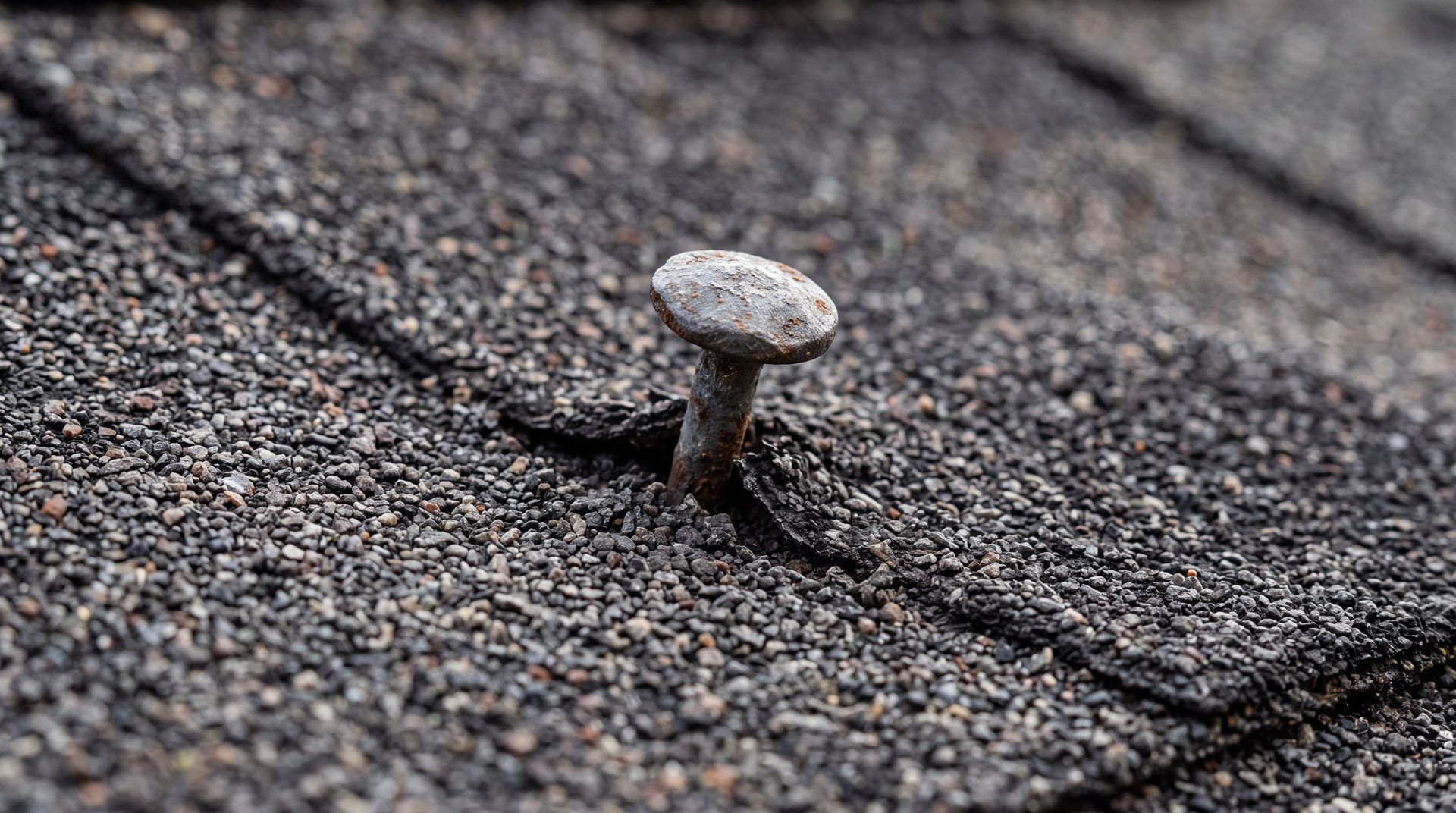
Roofing nails that begin to push upward or work loose can disrupt the overlapping protection provided by shingles, creating potential entry points for moisture. These problems, commonly called nail pops, may seem minor at first, but they can lead to roof leaks if left unaddressed.
Nail pops can develop for several reasons, including improper installation, movement in the roof decking, and changes in temperature. Homeowners who notice raised shingles, visible nail heads, or small bumps across their roof should consider having the area inspected before minor problems develop into more serious leaks.
What Are Roof Nail Pops?
Roofing nails secure shingles to the underlying roof decking, also known as the roof sheathing. When installed correctly, the nails help hold the shingles in place against wind and weather. However, if a nail is improperly driven or the materials around it shift, the fastener may no longer sit flush against the roofing surface.
A nail pop occurs when a roofing nail loosens, backs out of the roof decking, or pushes upward enough to affect the shingles above it. In some cases, the nail head becomes visible through the shingle surface. In others, the nail creates a small raised area that interrupts the otherwise flat appearance of the roof.
What Causes Roofing Nails to Pop Up?
- Improper nail placement: Roofing nails must be installed in the manufacturer's recommended fastening zone. If a nail is driven too high, too low, or at an angle, it may not secure the shingle correctly. Incorrect placement can also leave the nail head in a position where it interferes with the shingle above it.
- Overdriven or underdriven nails: Nails that are driven too deeply can damage the shingle material and reduce its ability to hold securely. Nails that are not driven far enough may leave their heads raised above the shingle surface. Both situations can compromise the roof's performance.
- Roof decking movement: Roof decking can shift or flex due to changes in moisture, temperature fluctuations, or structural movement. If the decking moves around a fastener, the nail may gradually loosen or become more prominent beneath the shingle.
- Temperature changes: Roofing materials expand and contract as temperatures fluctuate. Repeated changes can contribute to movement within the roofing assembly, particularly when installation issues or other weaknesses are already present.
- Aging roofing materials: Over time, shingles can become brittle, adhesives can lose effectiveness, and fasteners may loosen, making older roofs more susceptible to nail pops and other fastening problems.
Why Nail Pops Can Lead to Roof Leaks
A nail head pushing up against the shingle above it can cause the surrounding material to lift or become distorted. This can create a small gap that allows wind-driven rain to move beneath the shingle. If the nail head is exposed, water may also reach the fastener and the opening surrounding it.
Roofing shingles overlap to guide water downward, so even a small disruption can degrade the effectiveness of the roofing system. Moisture that gets beneath the shingles may reach the underlayment or roof decking, potentially causing wood deterioration, damaged insulation, and interior ceiling stains.
Do Nail Pops Need to Be Repaired?
Nail pops should generally be evaluated and repaired when discovered. The appropriate repair depends on the condition of the shingle, the fastener, and the underlying decking.
A roofing professional may need to remove or lift the affected shingle carefully, secure it with properly positioned fasteners, and replace damaged materials. If the original nail hole has enlarged or the decking no longer holds the fastener securely, simply hammering the nail back down may not provide a lasting solution.
Sealant alone is also not necessarily an adequate fix. Although certain roofing sealants have appropriate uses, they should not substitute for correcting a loose fastener or damaged substrate.
If nail pops appear across multiple areas of the roof, a broader inspection may help determine whether the issue stems from installation problems, aging materials, or decking movement.
Get Roof Damage Inspected and Repaired in Kalamazoo
If you have noticed raised shingles, exposed nail heads, or other signs of roof damage, contact Advantage Roofing & Exteriors at (269) 372-1691 to schedule a professional inspection.