Wind-Driven Snow and “Invisible” Roof Flashing Failures in West Michigan
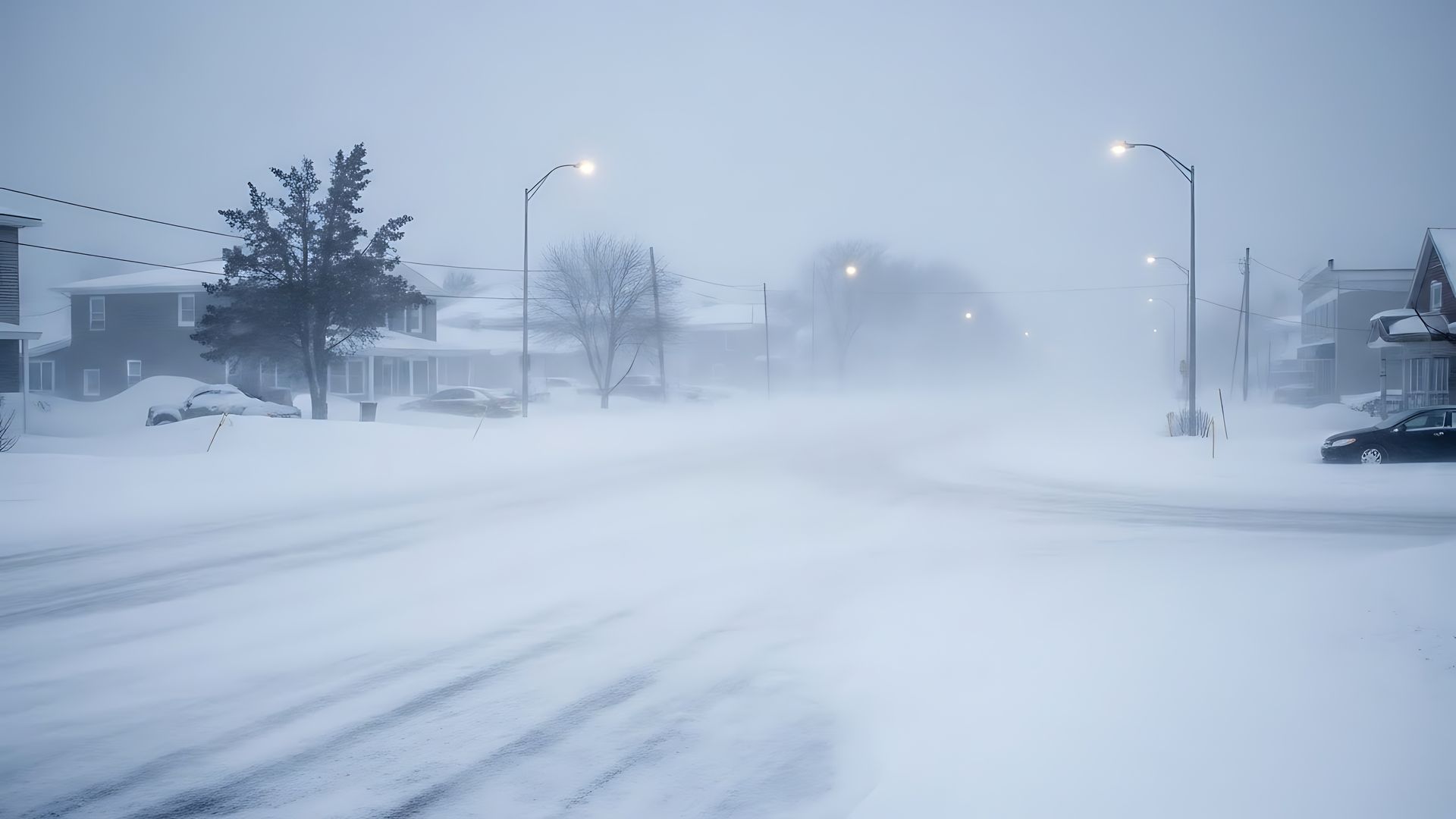
Not all winter roof leaks start with missing shingles. Many begin where planes meet, materials change, and water transitions from one surface to another. These are the areas protected by flashing, and when wind-driven snow enters the picture, even small weaknesses can become hidden entry points.
Wind does not just drop snow onto your roof. It pushes it sideways, packs it into joints, and forces melting water uphill under shingles. That combination of snow load and wind pressure is what exposes “invisible” flashing failures.
The most vulnerable areas are chimneys, valleys, and roof-to-wall sidewalls.
How Wind-Driven Snow Finds Weaknesses
Snow alone is heavy. Wind alone is forceful. They add more stress together at transition points on your roof than either would on their own.
When snow accumulates, it does not melt evenly. Heat escaping from the home can create uneven thawing. Meltwater travels downward until it refreezes at colder edges or under shaded areas. Meanwhile, wind pushes loose snow into seams and tight spaces where it normally would not reach.
These transitions are where flashing is supposed to do the work.
Flashing is not decorative. It is engineered to redirect water away from joints. When flashing is poorly integrated, improperly layered, or aged, wind-driven snow will find those weaknesses.
Often, homeowners do not notice the problem until interior staining appears weeks later.
Chimneys: Step Flashing and Counterflashing Details
Chimneys are one of the most common sources of winter leaks in Kalamazoo homes. They interrupt the roof slope and create multiple seams where roofing meets masonry. A proper chimney flashing system includes:
- Step flashing layered with each shingle course
- Counterflashing embedded into mortar joints
- A properly sealed cricket or saddle on larger chimneys
- Ice and water shield protection beneath surrounding shingles
When wind-driven snow builds up on the uphill side of a chimney, meltwater can back up against flashing. If counterflashing is loose, improperly embedded, or sealed only with surface caulk, water can slip behind it.
A meticulous roof inspection looks beyond visible gaps. A roofer should confirm that step flashing pieces are individually layered, secured correctly, and that counterflashing is truly integrated into the masonry instead of simply sealed along the surface.
Valleys: Concentrated Water Flow Under Snow Load
Roof valleys collect more water than any other area of the roof. During winter, they also collect drifting snow.
Wind-driven snow becomes compacted into valleys and melts slowly. As temperatures fluctuate, meltwater concentrates along the valley channel. If the valley flashing is corroded, improperly fastened, or inadequately sealed at transitions, water can travel beneath shingles.
A detail-focused roof inspection includes:
- Evaluating metal valley condition and thickness
- Checking for exposed fasteners in water channels
- Looking for separation along woven or cut valleys
- Inspecting underlayment integrity near valley seams
Valley issues are rarely dramatic at first. Instead, they allow gradual water intrusion that damages decking over time.
Sidewalls: Where Roof Planes Meet Vertical Surfaces
Sidewalls, like those along dormers or second-story walls, depend heavily on properly installed step flashing.
Each shingle course should have its own individual step flashing piece. These pieces must overlap correctly and be integrated beneath siding in a way that allows water to exit freely.
Wind-driven snow is especially problematic along sidewalls because drifting accumulates against vertical surfaces. When that snow melts, water runs directly along the flashing line.
During a professional inspection, a meticulous roofer looks for:
- Missing or improperly sized step flashing
- Continuous flashing used instead of individual step pieces
- Improper siding overlap that traps water
- Signs of past patch repairs instead of proper integration
Small integration errors often go unnoticed until winter conditions expose them.
Why These Failures Are Called “Invisible”
Flashing failures are rarely visible from the ground, and water intrusion at transitions does not always create immediate dripping. Instead, moisture can travel along framing members, soak insulation, and slowly stain ceilings or walls far from the original entry point.
By the time interior damage appears, the flashing weakness may have existed for seasons.
What a Meticulous Roofing Inspection Looks Like
Not all roof inspections are the same. A generic walk-around may miss subtle flashing integration problems. A thorough winter-focused inspection evaluates:
- The layering of step flashing beneath shingles
- The condition and embedment of counterflashing
- Valley metal integrity and alignment
- Signs of ice dam influence
- Underlayment protection at transitions
- Evidence of past improper repairs
Trust Our Detail-Oriented Roofers to Protect Your Roof in Kalamazoo
If your West Michigan home has been subjected to heavy snow, drifting accumulation, or unexplained winter leaks, now is the time to schedule a professional evaluation.
Contact Advantage Roofing & Exteriors today at (269) 372-1691 for a comprehensive roof inspection and make sure invisible flashing failures do not become costly structural repairs.