Why Your Gutters May Be Overflowing Even Without a Clog
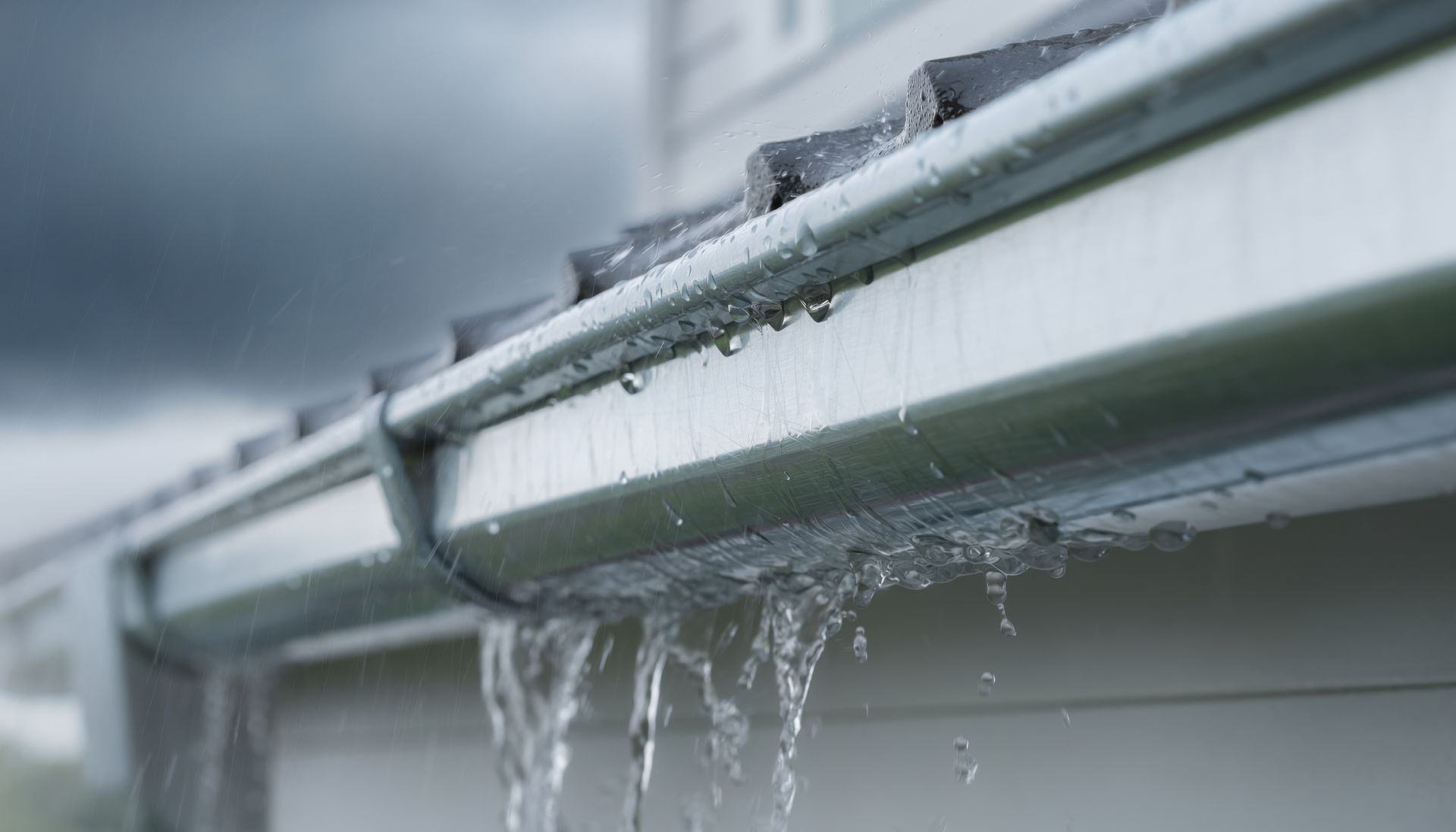
Roofing components and gutters work together to move water safely away from your home. If something along the roof edge or within the drainage system is misaligned or deteriorating, water may bypass the gutter or overwhelm it during storms.
Roof Edge Conditions That Can Cause Gutter Spillover
Drip Edge Problems
Drip edge flashing is installed along the roof edge beneath the shingles to help direct runoff away from the fascia and guide it into the gutter.
If the drip edge is missing, improperly installed, or bent away from the gutter, water may follow the underside of the roof edge instead of dropping into the gutter. In these cases, it can appear as if the gutter is overflowing when water is actually running behind it.
Underlayment Edge Behavior
Roof underlayment sits beneath the shingles and extends to the edge of the roof deck. If the underlayment extends too far past the drip edge or begins to curl over time, water can cling to the material as it flows off the roof.
Instead of falling directly into the gutter, runoff may follow the underside of the roof edge and drip behind the gutter system.
Fascia Damage or Movement
Gutters attach directly to the fascia board along the roof edge. If the fascia begins to rot, warp, or shift slightly, the gutter can move out of alignment.
Even small changes in position can create gaps between the roof edge and the gutter. When water reaches the edge of the roof, it may slip behind the gutter instead of entering it.
Gutter System Issues That Can Cause Overflow Without Debris
Improper Gutter Slope
Properly installed gutters should maintain a slight slope toward the downspouts so water can drain efficiently. If sections of the gutter are level or sloped incorrectly, water may collect in certain areas.
As water builds up in those low spots, it can eventually spill over the front edge of the gutter even though the system itself is clear.
Downspout Capacity and Drainage
Sometimes the gutter itself is not the problem. Long gutter runs that drain to a single downspout may struggle to move water away quickly during heavy rain.
Partially restricted downspouts can create a similar issue. When water cannot exit the system efficiently, it may back up and spill over the gutter edge.
Gutter Guard Limitations
Gutter guards are designed to keep debris out of the gutter, but they can sometimes affect how easily water enters the system.
Different gutter guard designs are better suited for certain types of debris. Large leaves, pine needles, pollen, and other materials can accumulate on or around certain guard styles, which may slow how quickly water enters the gutter during heavy rain.
Heavy Roof Runoff Can Overwhelm Gutters
Large roof areas can generate significant runoff during spring rainstorms. As rain flows across the roof surface, it collects along the roof edge before entering the gutter.
Steeper roofs and smooth roofing materials can move water quickly toward the gutter line. If the gutter system is undersized for the roof area, it may struggle to handle the volume during intense rainfall.
Our Roofing and Gutter Experts Can Help Identify the Cause of Gutter Overflow
If the gutters on your West Michigan home continue to overflow even after cleaning, the issue may involve roof edge components, gutter alignment, or drainage capacity rather than a simple clog.
At Advantage Roofing & Exteriors, we inspect roofing and drainage components together to determine why water is spilling over the gutter system. Once the source of the problem is identified, we can recommend the appropriate repairs to protect your home.
Call (269) 372-1691 to schedule an inspection or learn more about our gutter services in Kalamazoo and West Michigan.