Roof Drainage Plans That Can Handle West Michigan Leaf Debris
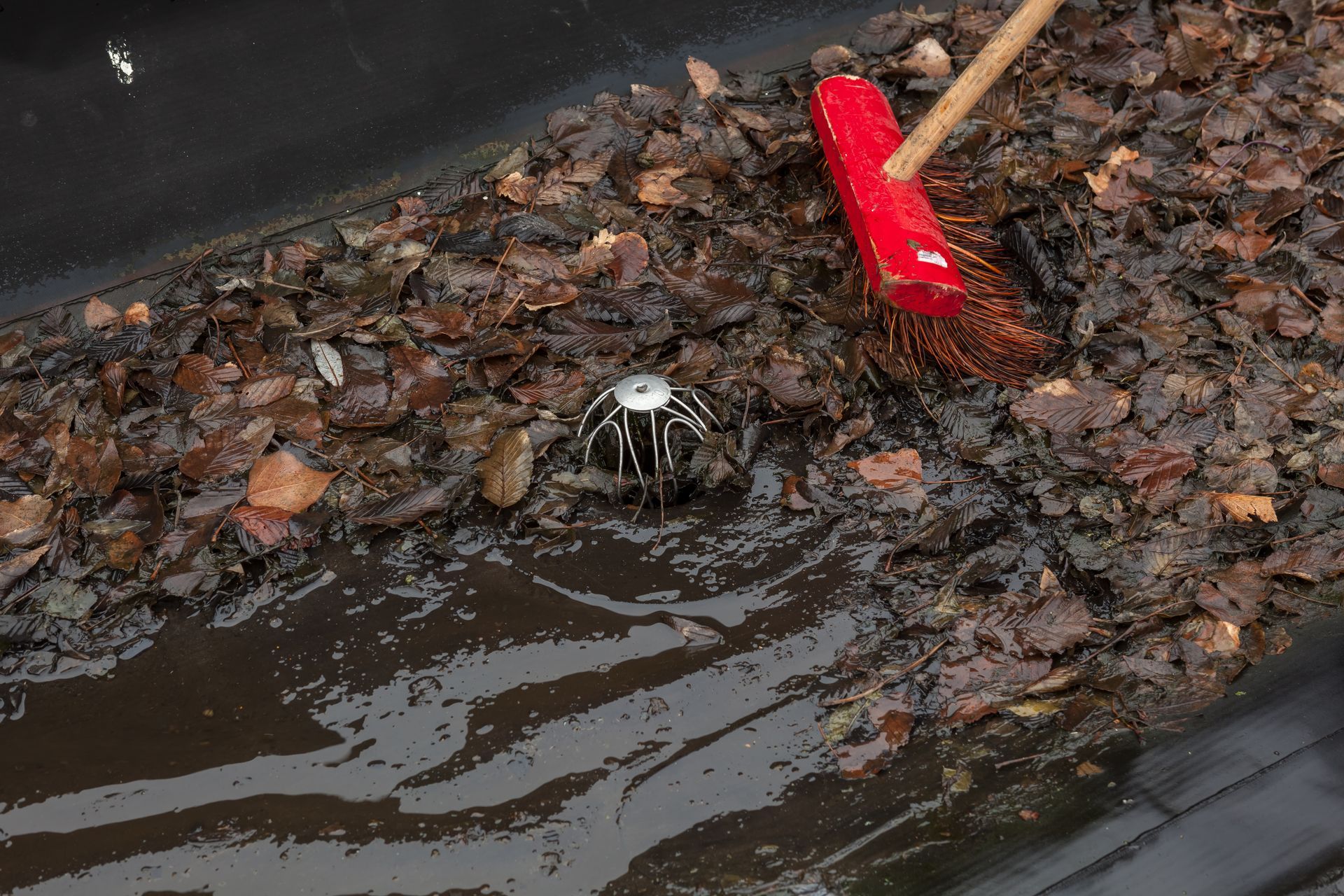
Homes in mature, tree-lined Kalamazoo neighborhoods deal with heavy leaf fall, steady debris buildup, and frequent freeze-thaw cycles. A roof drainage system that can handle these conditions is essential for preventing fascia rot, gutter overflow, ice dams, basement water intrusion, and foundation problems.
Gutter and roof cleaning can make damage from poor drainage less likely, but upkeep alone won’t eliminate systemic drainage problems.
Oversized Gutters That Handle Heavy Leaf Volume
In areas with heavy debris, standard 5-inch gutters often fill quickly and overflow during storms or rapid snowmelt. Upgrading to 6-inch gutters increases both water capacity and the size of the debris channel, which slows the rate at which leaves create a blockage.
This difference matters on homes with large roof planes or steep pitches, where more water reaches the gutter in a shorter amount of time. The larger profile reduces backup at the fascia line and helps maintain consistent water flow even when some debris accumulates.
Downspouts That Prevent Overflow and Fascia Damage
Downspouts are one of the most common weak points in older drainage systems. When there are too few downspouts, particularly if they’re undersized, even clean gutters can overflow.
Oversized downspouts allow small debris to pass through more easily and prevent the “clog at the elbow” problem common in older installations. Adding downspouts at key points on long gutter runs or near major roof valleys helps move water away faster and reduces overflow.
Downspout extensions or buried drain tile can also be good additions, enabling the system to carry water to more suitable discharge points, reducing foundation saturation, soil erosion, and basement moisture.
Valley Drainage Solutions for Roofs You Can’t Redesign
Roof valleys collect the most water because they combine two roof planes and funnel runoff into a concentrated path.
Homeowners cannot modify this geometry without major construction, so the goal is to help the existing valley drain properly. Splash guards installed at the gutter line can slow water as it exits the valley, reducing overshooting and improving gutter capture. Wider gutters below major valleys also help manage heavier water flow.
Valleys require particular attention because overflowing in these areas often goes unnoticed until fascia or siding shows damage. Even with clean gutters, valleys can overwhelm undersized systems during periods of rapid runoff.
Proper Gutter Pitch and Installation Practices
Gutters must be pitched slightly toward downspouts to keep water moving. When pitch is incorrect or gutters sag, standing water forms and accelerates deterioration of the gutter, fascia, and adjacent trim.
Older homes often have gutters attached with outdated hardware or fastener spacing that allows gradual sagging over time. Correcting the pitch or rehanging sections can resolve persistent drainage problems without replacing the entire system.
Consistent pitch also reduces winter issues. Water that cannot drain will freeze, weighing down gutters and creating ice formations that can damage the fascia or lead to ice damming at the roof edge.
Leaf Protection Systems That Reduce Maintenance
Leaf protection can improve drainage reliability in debris-heavy areas, but it is important to choose systems that actually fit West Michigan conditions. Mesh screens, solid covers, and hood-style guards each behave differently depending on debris type. Homes surrounded by pines need solutions that manage needles, while homes with large deciduous trees need systems that prevent leaves from matting on top of the gutter.
Leaf guards reduce maintenance frequency, but they do not eliminate the need to occasionally clean gutters and downspouts. Pairing guards with oversized downspouts improves performance and helps extend the time between cleanings.
Buried Drain Tile and Ground-Level Water Management
Roof drainage is only effective if the water is discharged far enough from the home. Buried drain tile can move water away from the foundation and prevent it from recycling back toward the structure during heavy runoff or rapid snowmelt.
In yards with limited slope, directing water farther from the home reduces the risk of soil erosion, settling, and moisture intrusion at the basement level.
Schedule a Roof Drainage Evaluation for Reliable Performance
Gutter size, downspout capacity, valley behavior, pitch, and where the water ultimately ends up are all important variables that influence the effectiveness of a home’s drainage capacity. Advantage Roofing & Exteriors provides gutter replacement, oversized downspout upgrades, splash guard solutions, and drainage improvements tailored to West Michigan homes.
Consult with our gutter specialists by calling (269) 372-1691 to scheduling a free estimate.