How to Tell What’s Really Behind Shingle Lift and Granule Loss
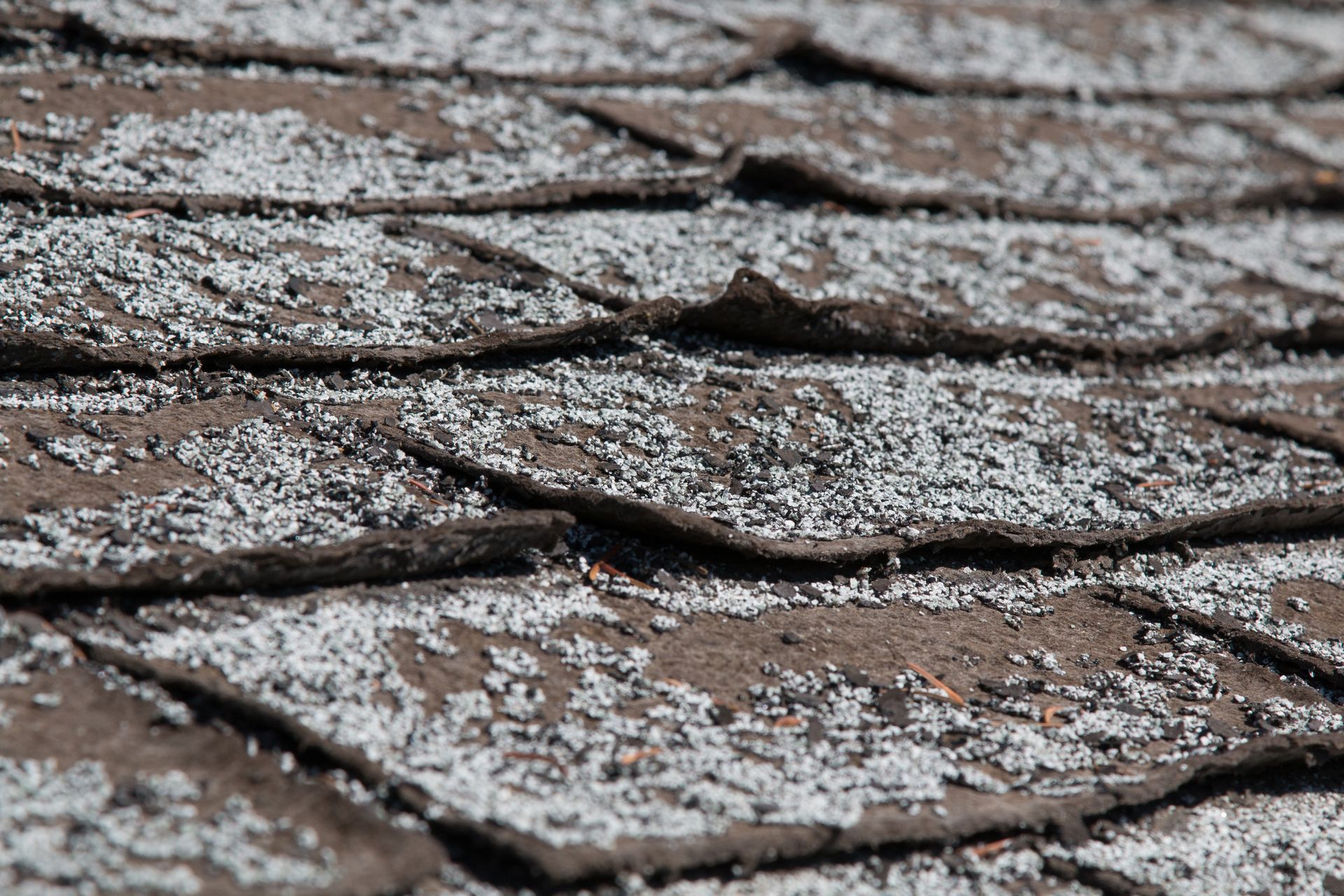
Shingle lift and granule loss are two of the most common signs of roof wear or damage homeowners notice from the ground. Seeing either one is a good reason to schedule a roof inspection right away.
Whether insurance will cover repairs or roof replacement is a separate issue. It ultimately depends on the root cause of the roof damage you’re seeing.
How Storm Damage Patterns Differ From Normal Wear
A roof affected by storm uplift or impact will show concentrated, directional, or sudden changes. Lifted or missing shingles will typically follow the prevailing wind pattern. Hail strikes will appear in isolated clusters rather than across the entire slope. These changes tend to develop all at once.
A roof experiencing normal aging will show more uniform symptoms. Granule loss increases evenly across sun-exposed areas. Curling or brittle shingle edges appear consistently along older slopes. These shifts happen slowly, not overnight.
Because these patterns differ so significantly, insurers rely on professional evaluations rather than homeowner photographs to establish cause and timeline.
What Actually Causes Shingle Lift
Shingle lift can have several origins, and the cause is not always obvious from the yard or driveway. It takes an up-close inspection from a qualified roofer to determine whether the movement was created by wind, aging materials, or installation errors.
Wind-Related Lift
When wind temporarily flexes a shingle upward, it can leave a visible crease at the top of the tab. These creases usually follow a directional pattern that matches the storm path, and missing shingles tend to appear in consistent lines or groupings. This type of lifting often occurs suddenly and is the kind of damage insurers commonly evaluate during storm-related claims. If the lifting was caused by a material defect and not age or roofer error, it might be covered by your roofing warranty.
Installation-Related Lift
Some lifted shingles have nothing to do with weather. High nailing, overdriven nails, or nails placed outside the manufacturer’s intended zone reduce the shingle’s holding strength. Seal strips can also fail to bond when shingles are installed in cold, dusty, or damp conditions. These patterns do not follow storm direction and usually appear in repeated rows consistent with a crew’s fastening pattern.
Insurance does not cover these issues, and neither will manufacturer warranties in most cases. If you hired a certified roofer who offers enhanced manufacturer warranties that cover workmanship, then installation errors might be covered. But those roofers are less likely to have made that type of installation mistake.
Aging-Related Lift
As shingles dry out and lose flexibility, curled edges or lifted corners become more common. This lift usually appears across broad areas of the roof and is most noticeable on slopes with heavy sun exposure. It reflects end-of-life wear rather than storm impact. Because this is considered normal aging, it is typically not covered by insurance or warranties.
What Causes Granule Loss
Granules protect shingles from ultraviolet exposure and help manage surface temperature. Seeing some in gutters is normal, but certain patterns indicate deeper problems.
Normal Wear
Uniform thinning of granules across large sections of the roof is simply a sign of an aging system. This wear shows up gradually and becomes more obvious when shingles start to look smoother or more discolored. It is expected as a roof approaches the end of its service life.
Hail or Impact-Related Granule Loss
Hail can knock granules free in concentrated circular or irregular scars where the underlying asphalt is exposed.
Homeowners cannot always see these bruises from the ground, and they are difficult to photograph accurately without close inspection. When verified by a roofer, this type of loss may be considered storm damage.
Thermal or Manufacturing Patterns
Some shingles shed excess granules early in their life cycle, which fades quickly. This is normal and not a manufacturing defect. Thermal cracking, on the other hand, can release granules along small fracture lines. This could be caused by a manufacturing defect, installation error, poor ventilation, or structural movement. Neither pattern resembles storm damage.
When a Claim May Be Possible and When It Is Not
Storm-related creasing, missing shingles resulting from uplift, and verified hail bruising may qualify for insurance evaluation. These are the types of conditions a roofer can document clearly for an adjuster.
Age-related wear, installation errors, seal strip failures from old age, and general granule thinning are typically not covered by home insurance. Even when these issues look concerning from the ground, they reflect predictable material deterioration rather than storm activity.
Whether material or installation defects would be covered by either a workmanship warranty from your roofer or a manufacturer warranty depends on the contractor you hired. One of the benefits of working with a reputable local roofer like Advantage Roofing & Exteriors that is both a GAF Master Elite® Contractor and CertainTeed Master Shingle Applicator™ is the added protection you get from enhanced manufacturer warranties.
Schedule a Professional Roof Evaluation if You Suspect Roof Storm Damage
A qualified Kalamazoo roofer from Advantage Roofing & Exteriors can distinguish storm impact from normal aging, document conditions accurately, and help you understand whether the damage may be covered by a warranty or insurance.
Call us at (269) 372-1691 to schedule your free roof inspection and estimate.