How to Tell If Roof Damage Was Caused by a Storm or Normal Wear
Insurance policies typically cover sudden storm damage but not long-term deterioration. The success of a storm damage claim hinges on whether you can clearly show your roof was damaged by a storm and isn’t just at the end of its normal lifespan.
Accurate documentation is key to avoiding unnecessary claim delays or disputes. The outcome of an adjuster’s investigation is more likely to be fair and appropriate when roof damage is properly inspected and documented by qualified roofers who provide reasonable repair or replacement recommendations.
Signs Roof Damage May Be Storm Related
Impact Damage
Hail can leave distinct impact marks on roofing materials. On asphalt shingles, hail strikes may create small circular bruises where the protective granules have been displaced and the underlying mat has been weakened.
Metal roof components like flashing, vents, and gutters may also display small dents or dings that indicate a recent hailstorm.
The marks can be subtle and may only be visible up close. Identifying hail damage often involves recognizing consistent impact patterns across different areas of the roof. Professional inspections typically include close-up photos and documentation that help show those patterns during the claims process.
Wind Damage
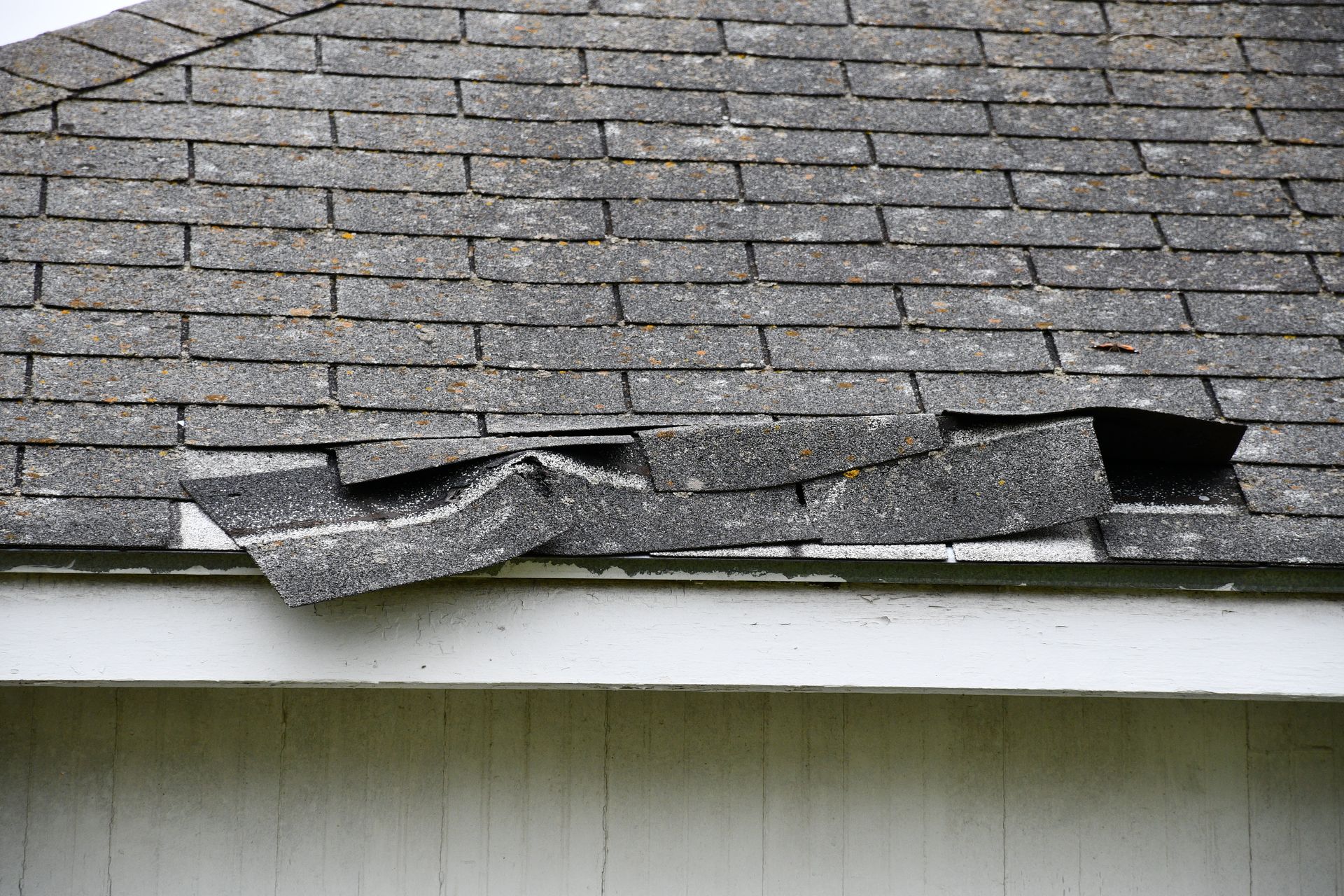
Strong winds can loosen or lift shingles, especially along roof edges, ridges, and other exposed areas, breaking the adhesive seal that normally keeps the shingle in place.
While missing shingles are easy to notice, a lifted shingle may appear nearly identical to the surrounding shingles. During an inspection, roofers look for less visible indicators and document them so adjusters can better evaluate the cause of the damage.
Debris Damage
Storms can also cause damage when branches or windblown debris strike the roof. These impacts may damage shingles, dislodge flashing, or create visible damage at the point of contact.
Unlike normal aging, debris damage is usually confined to a specific area rather than spread evenly across the roof. As with hail impacts, roofers have the experience to spot and document the subtle signs of debris impact damage.
Signs Damage May Be Related to Normal Wear
Aging Shingles
As asphalt shingles age, the protective granule layer gradually wears away. This type of granule loss typically occurs across large areas of the roof rather than in isolated spots.
Older shingles may also become brittle over time, making them more susceptible to cracking if they are lifted, flexed, or exposed to strong winds.
Long-Term Weather Exposure
Years of sun exposure, temperature fluctuations, and moisture can slowly degrade roofing materials. Shingles may begin to curl, cup, or lose flexibility as they age.
Sealants used around flashing and roof penetrations can also dry out or deteriorate after long periods of exposure to the elements.
Maintenance and Age Factors
Roofs nearing the end of their lifespan often show widespread wear. Instead of isolated damage, aging roofs may have multiple areas where materials are beginning to fail.
Gradual deterioration is considered part of the roof’s natural aging process rather than the result of a single storm event and is not covered by standard homeowners insurance policies.
Older roofs can still sustain legitimate storm damage. When that happens, insurance payouts may be influenced by the roof’s age and remaining value under the terms of the policy.
What a Storm Damage Roof Inspection Typically Includes
A storm damage inspection focuses on identifying patterns of damage across the roof system. Roofers examine shingles, flashing, valleys, roof penetrations, and other vulnerable areas where storm-related damage commonly occurs.
Inspectors look for signs such as impact marks, lifted shingles, broken seal strips, or missing materials. The goal is to determine whether the damage appears consistent with hail, wind, or debris impacts rather than gradual deterioration.
Proper documentation provided by the roofer can help clarify the situation for claims adjusters. They should provide photographs of visible roof damage and additional images of surrounding storm indicators, such as dented gutters or damaged vents.
Written notes describing the location and type of damage may also be included to provide a clearer record of the inspection findings.
Why Timing Matters for Storm Damage Claims
Insurance claims are typically tied to a specific storm event. Reporting damage soon after a storm can help establish a clearer connection between the weather event and the condition of the roof.
Delays in scheduling an inspection may make it more difficult to distinguish between damage caused by a recent storm and wear that developed gradually over time.
Our Kalamazoo Roofers Can Help Evaluate Potential Storm Damage
Our roofers at Advantage Roofing & Exteriors can evaluate your roof and document what they find. We can also provide recommendations on next steps for repair or claim filings.
Call (269) 372-1691 to schedule a roof inspection or a free roof replacement estimate.